
How Is Linen Wall Art Made? Inside Our Regional EU Supply Chain
3 September 2026
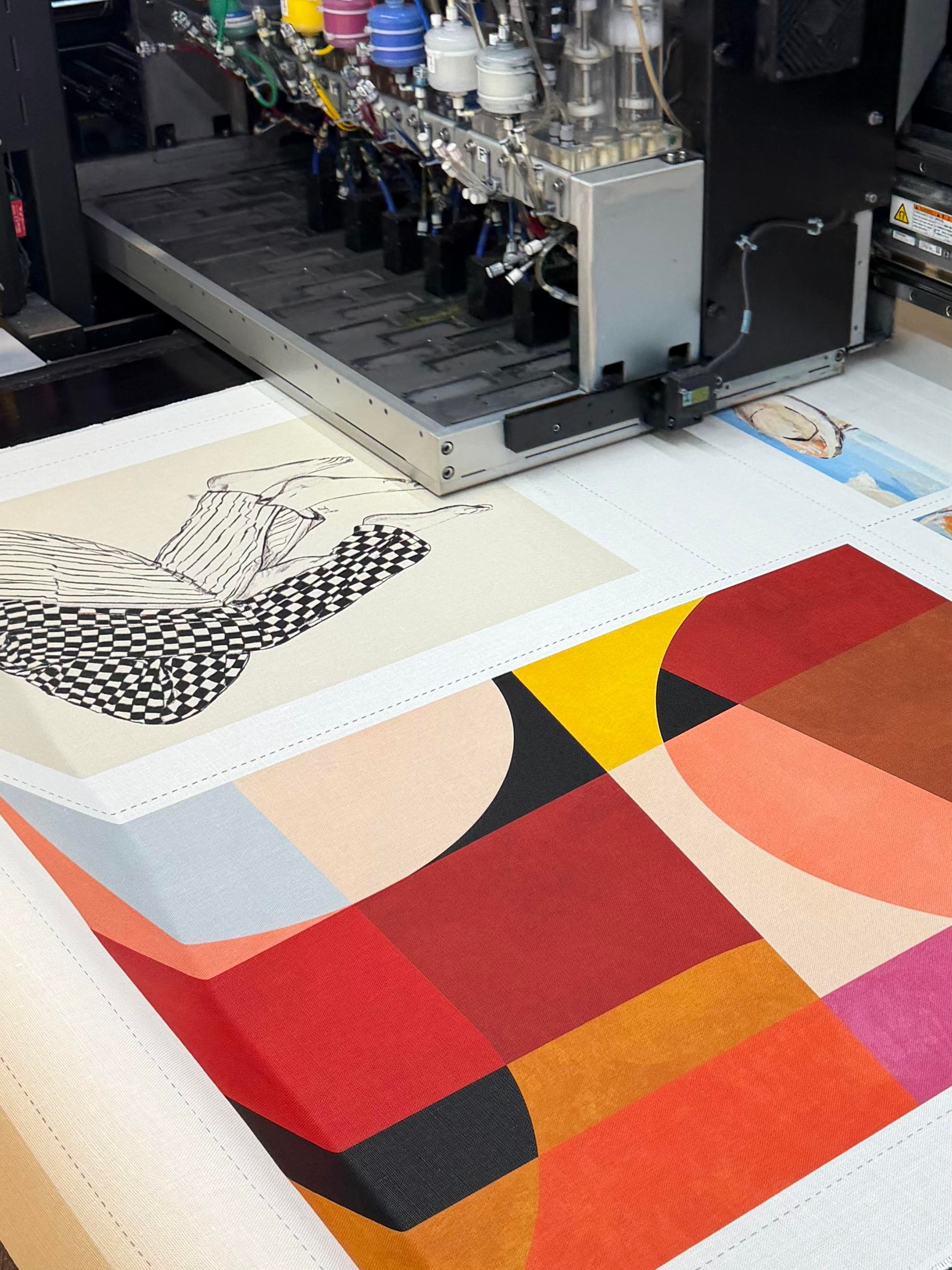
Linen wall art is manufactured by printing pigment inks directly onto woven flax fabric, fixing the color with heat, and suspending the finished textile from a precisely carved wooden rail. Most consumers assume wall art is either inexpensive mass-produced paper printed overseas or traditional framing constrained by heavy glass. We built a third option: an honest, regional supply chain spanning Poland, Croatia, and Slovenia.
If you need context on the characteristics of this medium before exploring our production floor, you can read our foundational guide on what linen wall art is. For those ready to see behind the scenes, this is exactly how we craft made-to-order wall art without excess waste.
Where do the raw materials for linen wall art originate?
Our raw materials originate entirely within Europe, specifically utilizing 100% natural flax linen from Poland and solid oak and beech timber from Croatia. Securing reliable, heavy-duty materials is the first and most crucial step in our manufacturing sequence.
We use a heavy 380 gsm weight flax linen. This dense construction provides the necessary structural integrity to hang flat against a wall without curling at the edges or stretching over time. Sourcing this specific grade of natural flax from Poland allows us to maintain a tight regional footprint while ensuring the textile can absorb rich pigments without bleeding.
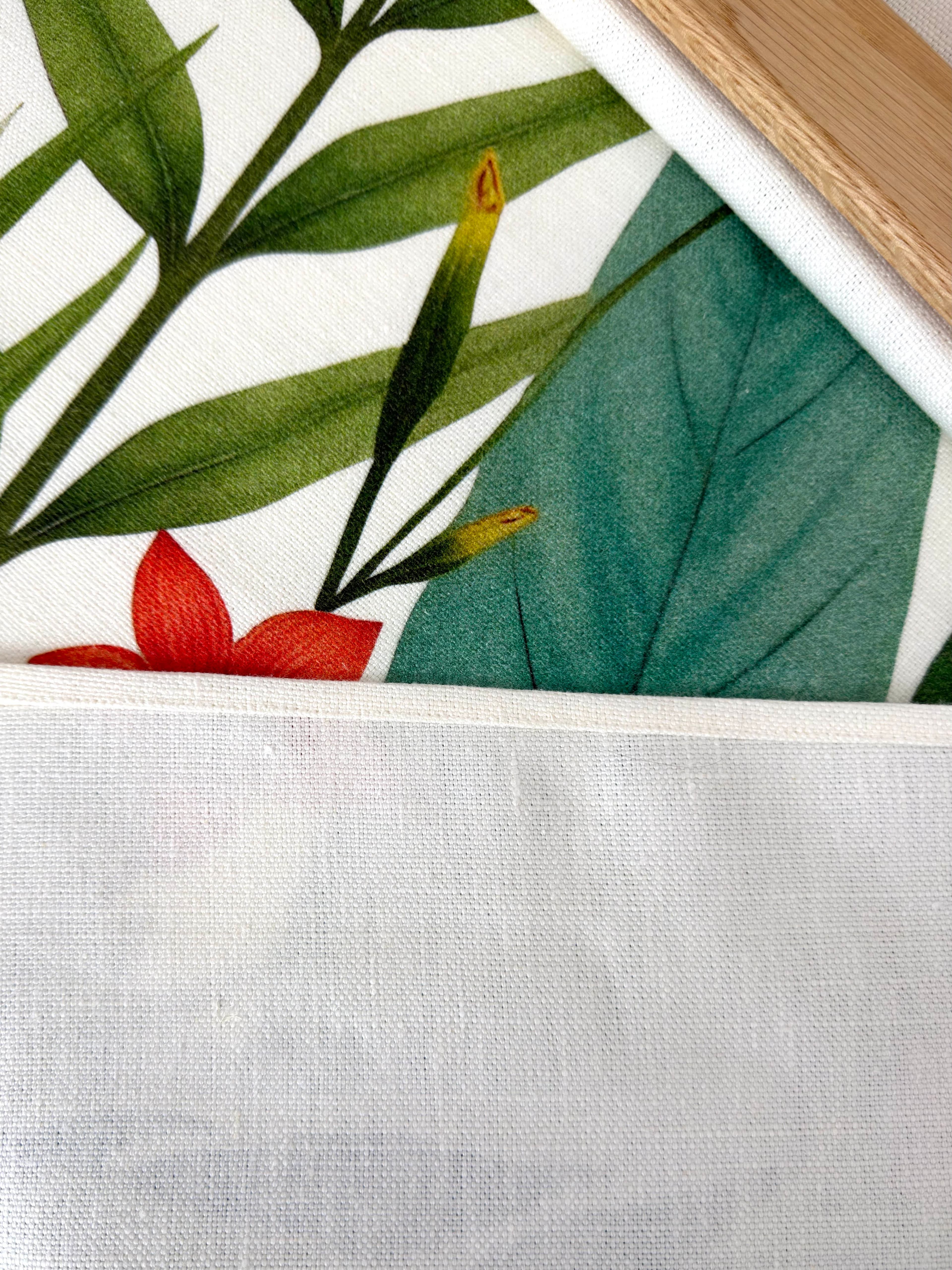
380 GSM Natural Flax Linen
A heavyweight woven textile sourced directly from Poland, selected specifically for its dense 380 grams-per-square-meter weight. This precise density ensures the art hangs perfectly flat and provides a highly textured substrate for digital pigment printing.
How does direct-to-fabric digital printing work?
Direct-to-fabric digital printing works by applying OEKO-TEX certified pigment inks directly into the natural linen fibers, followed by immediate heat fixation to cure the artwork into the textile.
Once the raw flax arrives from Poland, the printing phase begins. Our digital pigment process binds the colorants securely to the fabric on a molecular level. By running the freshly printed linen through a controlled heat fixation process, the inks cure instantly, ensuring long-lasting color fidelity and resistance to fading under standard indoor lighting conditions.
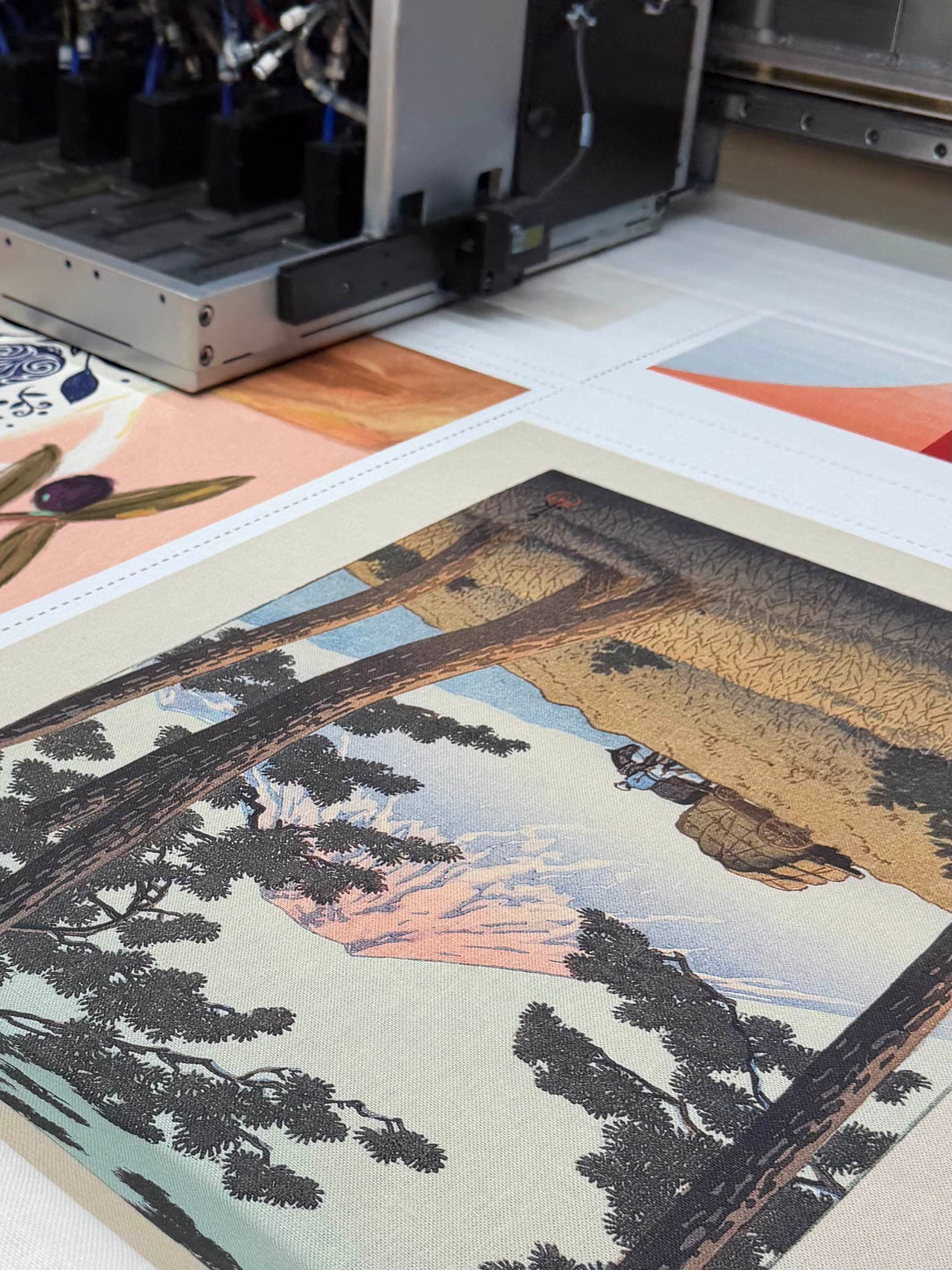
Zero-Water Pigment Printing
Traditional textile dyeing and printing often require massive volumes of water to wash and process fabrics. Our direct-to-fabric digital pigment process uses zero water. The inks are applied and cured via heat, completely eliminating toxic water runoff and industrial wastewater from this stage of production.
What happens during the fabrication process in our Varaždin workshop?
In our workshop in Varaždin, Croatia, the freshly printed linen undergoes precision hand-cutting, machine edging, and specific structural hemming to convert raw fabric into a finished art piece.
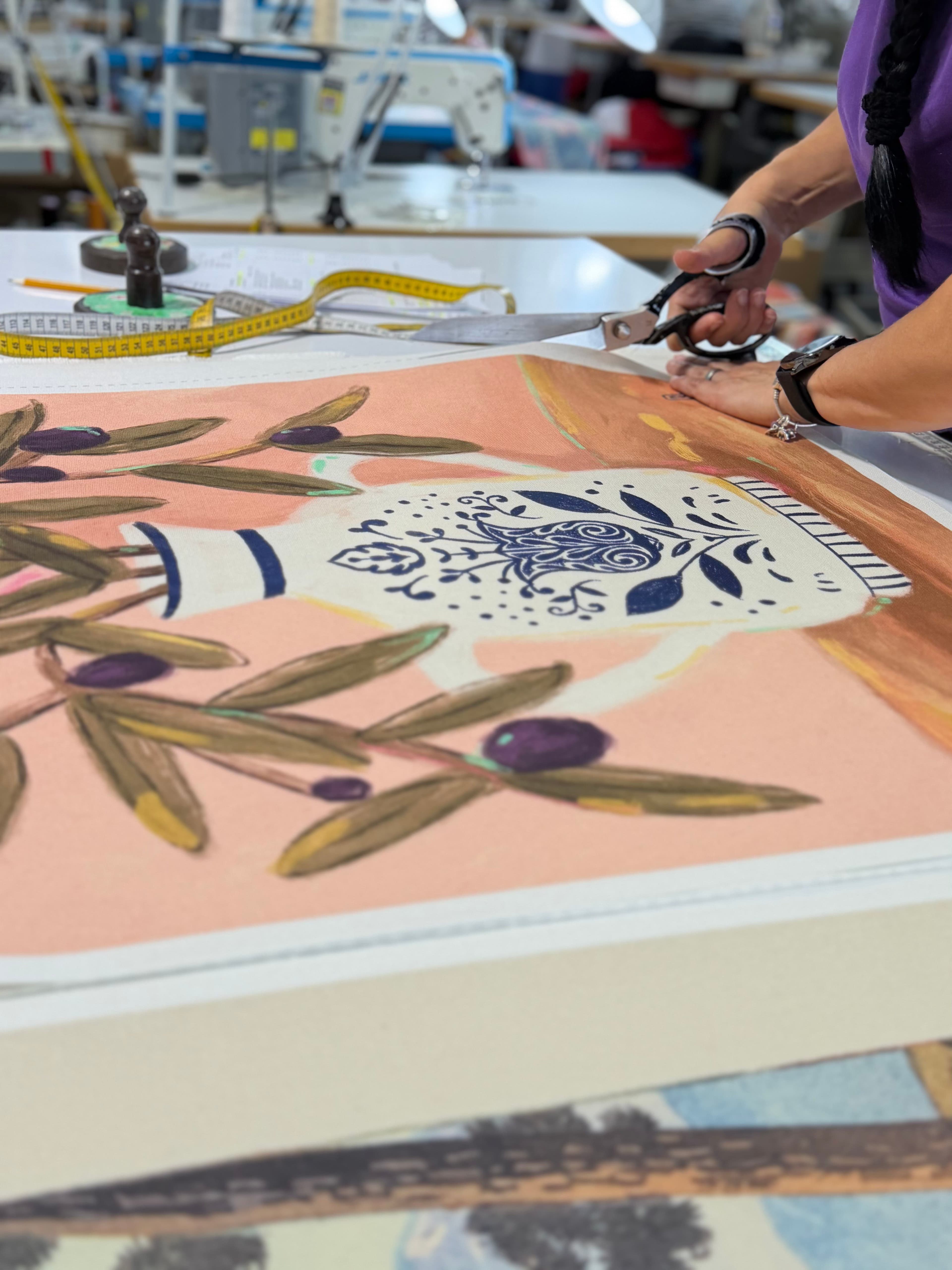
Because 380 gsm flax is a heavy, structured material, the cutting process relies on skilled hand-cutting rather than automated industrial cutters. By measuring and trimming each piece individually by hand along the natural grain of the weave, our craftspeople guarantee perfectly square, un-warped dimensions while maintaining strict tactile quality control. Once cut to the exact size of the commissioned artwork, the raw borders are secured by machine edging to prevent the woven natural fibers from fraying over the decades.
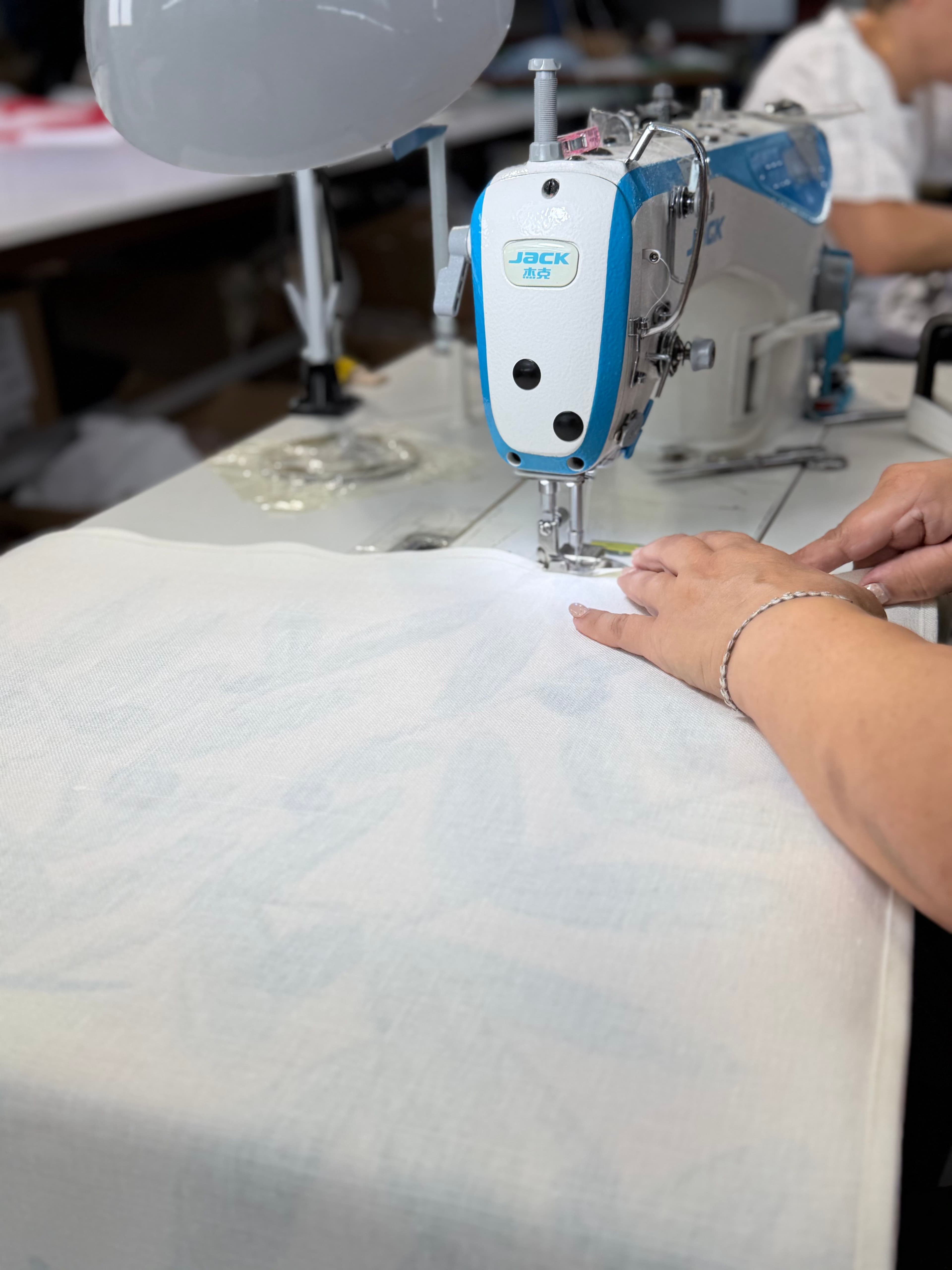
The most critical step in the Varaždin fabrication phase is stitching the top textile loop. Our production team precisely folds and stitches the upper edge of the fabric to create a continuous, reinforced horizontal tunnel. This integrated stitched loop is engineered specifically to hold the internal support rod, which distributes the physical weight of the heavy linen evenly across the width of the art.
How is the Linvela wooden hanging system crafted?
The wooden hanging mechanism is carved from a single solid piece of Slavonian oak or beech timber, ensuring zero joins, glues, or weak points across the entire width of the rail.
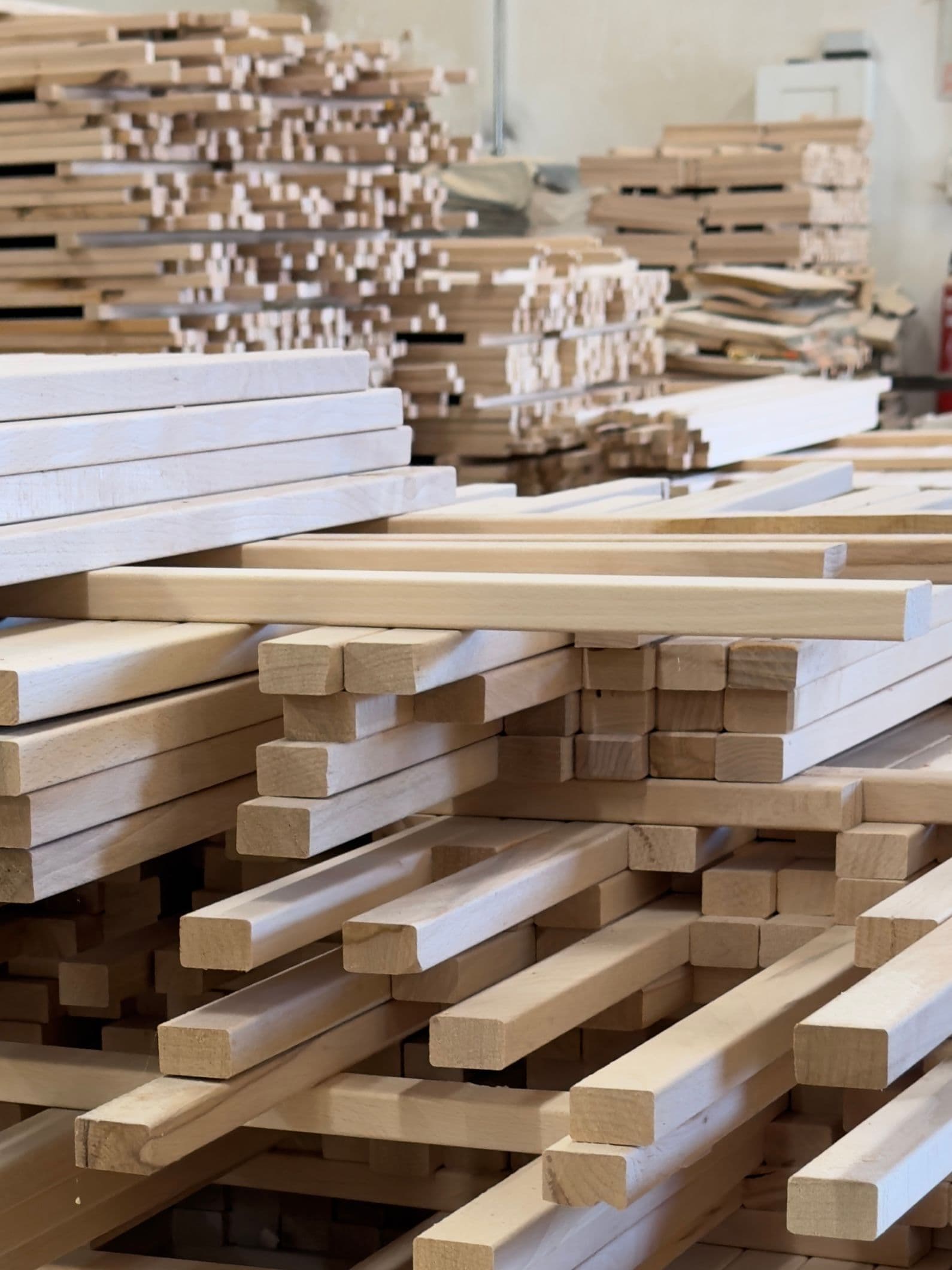
The raw timber is sourced from Croatian forests and transported to our specialized woodworking partner in Slovenia. There, the wood is milled, carved, and hand-finished into the proprietary rail structure. By strictly using a single piece of solid wood rather than glued composites, we guarantee structural integrity capable of supporting the heavy linen textile indefinitely.
This carved rail houses the internal support rod. When the rod is inserted into the linen's stitched textile loop, the entire assembly slides securely into the wooden rail, resulting in a clean, swappable mounting mechanism. For a closer look at the engineering of this specific hardware, review the mechanics of the Linvela system.
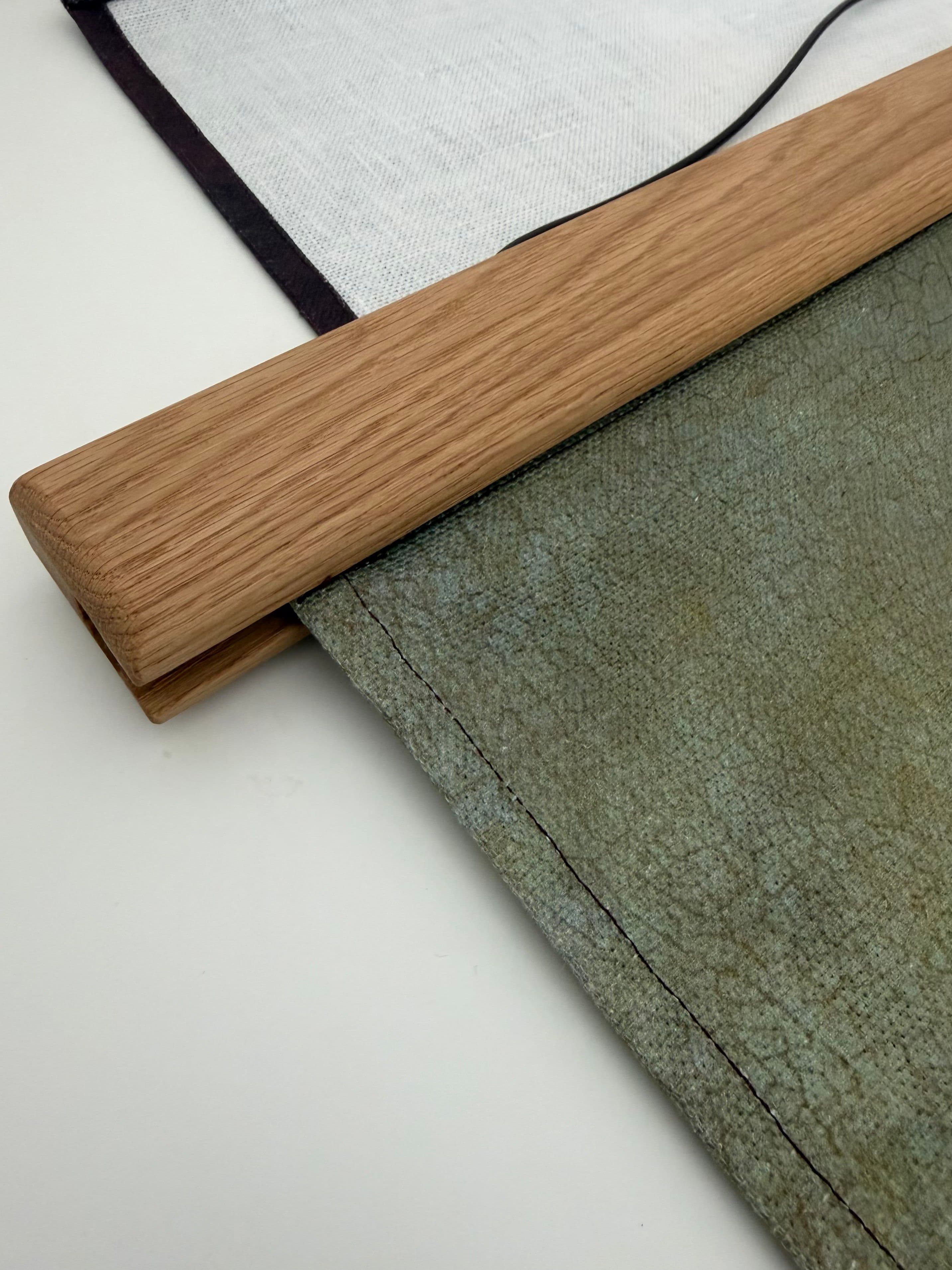
Single-Piece Timber Construction
Using a single, continuous piece of Slavonian timber for our rails eliminates the risk of snapping or warping at joints. This uncompromising approach to woodworking guarantees the hanging hardware will last as long as the linen art it supports.
How is made-to-order quality controlled and packaged?
Quality control involves a manual, visual, and tactile inspection of every printed textile and carved rail immediately before they are packed in strictly plastic-free materials.
Because our entire production chain operates on a made-to-order basis, pieces do not sit in massive warehouses collecting dust. When an order is placed, it initiates the sequence across our Polish, Slovenian, and Croatian partners. Once the final fabrication happens in Varaždin, we check the fabric tension, the ink clarity, and the structural integrity of the wood. The approved pieces are then rolled and boxed using exclusively paper-based, plastic-free packaging before shipping across Europe.
Made-to-Order Production
Producing wall art on demand ensures zero overstock waste and allows for meticulous quality control. The trade-off is that it requires a deliberate, multi-country regional fabrication sequence rather than the instant fulfillment associated with pulling a mass-produced paper print off a warehouse shelf.
How do you maintain linen wall art for long-term durability?
You maintain linen wall art by lightly dusting the surface with a clean, dry cloth as part of your normal room cleaning routine.
Sustainable EU production results in inherent design longevity, provided you treat the materials correctly. Because the inks are heat-fixed directly into the 380 gsm flax, the artwork is robust, but it remains a natural textile. You must keep the surface dry and avoid all liquid cleaners. For a high-level summary of long-term care precautions, review our care guide. If you are ready to explore the finished result of this production process, browse our made-to-order catalog.
Frequently Asked Questions
How is linen wall art printed?
Linen wall art is printed using a direct-to-fabric digital pigment process. OEKO-TEX certified inks are applied directly to the flax fibers and instantly cured using heat fixation, a process that requires zero water.
Where is Linvela wall art made?
Linvela wall art is made entirely within the EU through a regional supply chain. We source 380 gsm flax linen from Poland, carve our solid timber rails in Slovenia, and handle all printing, cutting, and stitching in-house in Varaždin, Croatia.
Can I machine wash my linen wall art?
No, you cannot machine wash linen wall art. To ensure the heat-fixed pigments and heavy 380 gsm flax retain their structure and clarity over time, you should only clean the artwork by lightly dusting it with a clean, dry cloth.
What kind of wood is used for the hanging rails?
The hanging rails are crafted from solid Slavonian oak or beech sourced from Croatia. Every rail is milled and hand-finished in Slovenia from a single, continuous piece of timber to ensure zero joints or weak points.